


For the ADHD brain that's been running on fumes since high school, the postpartum body that hasn't caught up to the calendar, and the marriage that's stopped fighting because it's easier than trying.
Therapy For Women, Mothers, and Couples in Corinth Mississippi
You already know something needs to change. You've probably known for a while — since before the last time you told yourself, "After this week gets easier, I'll deal with it." That week never came. It doesn't for anyone.
I'm Brittany Cox, LCSW, and I work with women, mothers, and couples across Mississippi and Tennessee — online and in person in Corinth.
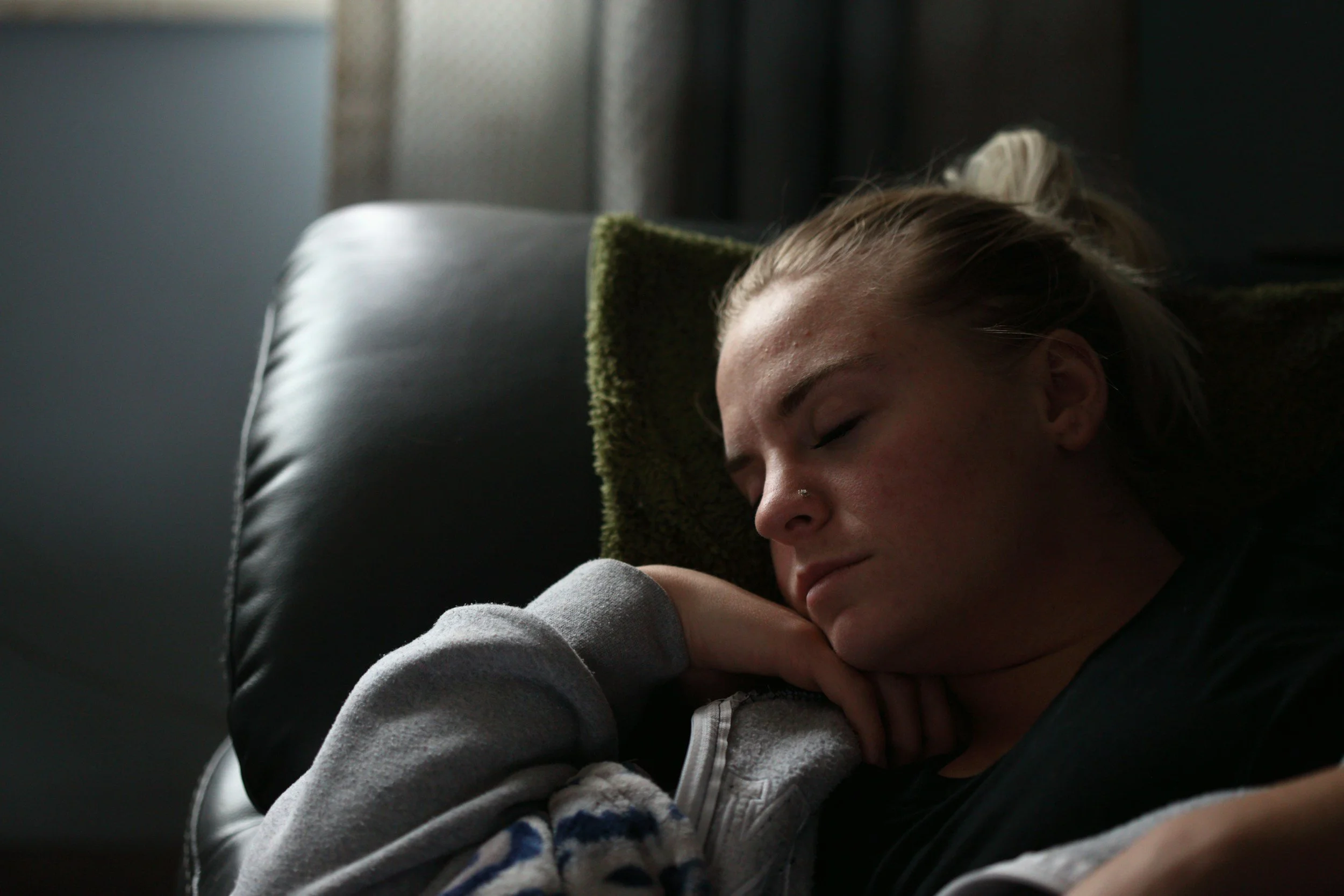
You get things done. People rely on you for that. And you are running on a kind of empty that a good night's sleep doesn't fix.
You've Googled it at 11pm — why am I like this, why can't I just keep up, why does everyone else seem fine. You've downloaded the app. Bought the planner. Read the book everyone recommended. It worked for two weeks. Then it didn't, and you were back where you started, except now you also felt like you'd failed at fixing yourself.
That's not a willpower problem. It's usually one of three things: a brain wired for ADHD that's been compensating so long you forgot it was compensating, a nervous system still in the aftershock of having a baby, or a relationship stuck in a loop neither of you built on purpose.
Cox Counseling in Corinth, Mississippi works with exactly those three situations. Call, email, or book your free consult below.
You're not lazy. You're not dramatic. You're not failing.
You're not lazy. You're not dramatic. You're not failing.
The Benefits of Working with Me
-

You follow through on what you said you'd do — without days of dread. Not because you found the perfect system, but because the thing making follow-through hard finally got addressed.
-

Your energy stops swinging between "fine" and "flattened." No more overfunctioning and overperforming for two weeks and then losing an entire weekend or longer recovering from it.
-

You get through an average Tuesday without your brain running six alarms at once. Calm and clarity aren't just a bonus outcome here — it's the baseline we're building toward.

ADHD that finally has a name. You're exhausted from proving you're not lazy, not scattered, not "too much." [Learn how ADHD therapy works →]
A baby you love and a version of yourself you can't find. The intrusive thoughts, the guilt, the feeling that everyone else bonded instantly and you're still waiting to. [Learn how postpartum therapy works →]
A marriage that used to feel easy. You're not fighting less because you fixed anything — you're fighting less because you stopped bringing things up. [Learn how couples therapy works →]
You've spent years developing workarounds — masking, over-functioning, white-knuckling your way to "fine." That holds until it doesn't, and then it collapses hard: overstimulation tips into overwhelm, overwhelm tips into shutdown or overcompensation, and the same performance pressure that used to keep you going becomes the thing that's breaking you.
You don't need to try harder. You need an approach built around how you're actually wired — not one more strategy borrowed from someone whose brain, body, or relationship works differently than yours.
ADHD in women is chronically underdiagnosed. Postpartum anxiety is chronically minimized. And most relationship conflict gets treated like a communication problem when it's really a pattern problem.
WHAT'S ACTUALLY HAPPENING

HOW I HELP
Support for Women with ADHD, Postpartum Mothers, and Couples
-

Postpartum Therapy
For the anxiety, the guilt, the intrusive thoughts you haven't said out loud, and the identity that feels like it's gone missing since the baby came.
-

ADHD Therapy for Women
For the follow-through gap, the burnout cycle, and the mental noise that won't turn off — treated as a brain-wiring issue, not a character flaw.
-

Couples Therapy
For two people who still love each other and have somehow ended up feeling like roommates, opponents, or coworkers who share a bed.
-

How We Work Together
CBT, ACT, and Brainspotting Level I, explained in plain language, not clinical shorthand.

About Brittany
She stops blaming herself for a brain, a body, or a relationship that was never actually broken. She stops overcompensating — masking the ADHD, performing "fine" through postpartum anxiety, keeping the peace in a marriage that's gone quiet in the wrong way. And she starts building a life that fits who she actually is, instead of who she's been pretending to be to keep everyone else comfortable.
I'm Brittany Cox, LCSW, and the women, mothers, and couples I work with aren't struggling because they haven't tried. The ADHD clients have spent years running strategies built for a different kind of brain and wondering why they keep failing anyway. The postpartum clients have smiled through months of feeling like a stranger in their own life because nobody told them that was allowed to be this hard. The couples have read every relationship book there is and are still having the same argument in different clothes. They come to me burned out, ashamed, and usually further along in understanding their own situation than they've given themselves credit for.
My approach is direct and built around what's actually driving each situation — the masking and shame spiral underneath ADHD, the nervous system still in survival mode after having a baby, the automatic cycle keeping two people who love each other stuck in the same fight — not one generic template stretched across all three.


What Life Can Feel Like
Waking up without already feeling behind. Feeling calm instead of constantly overwhelmed. Being present with your family without your mind running somewhere else. Trusting yourself to handle what comes up instead of spiraling into what-ifs. Having space to rest without paying for it in guilt.
Together, we work on:
Calming the mental chaos and the constant overthinking
Reducing burnout and emotional overwhelm before it becomes a crash
Building systems and routines that fit how you actually function, not how you think you should
Feeling in control of your time, energy, and responsibilities again
Rebuilding a sense of steadiness and confidence in your daily life
This isn't about doing more. It's about finally feeling like yourself again.
What other clinicians say about Brittany
-
![A woman with curly brown hair and glasses smiling, against a geometric teal and beige background.]()
“Brittany is a compassionate, affirming therapist who helps overwhelmed women and mothers feel truly seen and supported. She brings warmth, insight, and practical guidance to her work, especially with neurodivergence, burnout, and anxiety.“
Alyssa Desroches
LICSW, LCSW
-
![Woman with curly dark hair smiling outdoors in a grassy area]()
“I highly recommend Brittany. She brings a calm, compassionate, and supportive presence to her work and is deeply passionate about supporting mothers. Brittany creates a warm, safe space where clients feel understood, validated, empowered, and cared for.“
Amber Gambel
LCSW
-
![Portrait of a woman with shoulder-length black hair, wearing a black blazer and a light-colored top, smiling against a plain background.]()
“Brittany is incredibly supportive and compassionate for individuals seeking support with ADHD, relationship concerns, and women's issues. She provides supportive approaches that help clients feel understood while empowered.“
Theresa Parsons
LPC-S, BC-TMH
-
![A young woman with long blonde hair smiling while sitting on a couch indoors, with a window in the background.]()
“Brittany is a supportive and empowering therapist who helps women and mothers who are overwhelmed and struggling with ADHD, burnout, and postpartum challenges. She provides validation and helps her clients feel seen, heard, and cared for.“
Lori Ezzedine
MA, LPC, LMHC
-
![A therapist with blonde hair smiling, wearing a blue cardigan over a black-and-white checkered blouse, standing in front of a white wall with a window that has colorful decorations.]()
Brittany is knowledgeable, caring, and deeply invested in helping her clients reach their goals. She will create a safe and supportive environment where clients will feel heard, respected and empowered.
Karla T. Pellizzer Clinical Social Work/Therapist, LCSW, LCSW-S
-
![Close-up of a smiling therapist with long black hair, wearing dark makeup, a black necklace, and a black and white striped top, outdoors with blurred green background.]()
Brittany is warm, genuine, and easy to talk to. She truly cares about the people she works with, and I'd absolutely recommend her to anyone looking for a supportive therapist.
Hijazi McCoy
Psychiatric Nurse Practitioner, MSN, APN, PMHNP-B






Frequently Asked Questions
-
Yes. I'm in-network with BCBS, Cigna, and Aetna. I also see self-pay clients, and I provide a superbill for anyone using out-of-network benefits or HSA/FSA funds.
-
Yes. I'm licensed for telehealth throughout Mississippi and Tennessee, so you can work with me from anywhere in either state. In-person sessions are available in Corinth.
-
Usually because the therapy wasn't built around what was actually driving the problem. A lot of general therapy treats ADHD like a discipline issue, postpartum struggles like ordinary stress, and relationship conflict like a communication skills gap. Underneath those surface issues are usually a dysregulated nervous system, a specific brain wiring, or a repeating pattern between two people — and that's what CBT, ACT, and Brainspotting are built to actually work with.
-
Most clients notice a real shift within 6 to 10 sessions. Some stay longer to work on deeper, longer-standing patterns. We set specific goals early so you're not guessing whether it's working.
-
Start with a free consultation. If your struggle overlaps more than one category (very common — ADHD and postpartum anxiety show up together constantly), we'll figure out where to start in that first conversation, not before it.